Six months ago, the advice on where to put your cash was clear. Rates had been falling since September 2024, the Fed was signaling more cuts, and money sitting in a 4.00% HYSA was at risk of earning 3.25% by summer. Move some of it into CDs or T-bills before the cuts land. Lock in what you can while you can.
That advice was right. The people who acted on it in December and January are holding CDs bought at 4.25-4.35% in an environment where current CD rates have settled closer to 3.80-4.10%. They captured the premium. The people who waited — reasoning that they’d act “once things became clearer” — are now making decisions in a market where the premium is largely gone.
This isn’t a told-you-so. It’s setup for the more interesting question: given where rates actually landed, what’s the right cash allocation framework for the second half of 2026?
Where the Rate Environment Actually Sits Right Now
The Federal Reserve has held rates at 3.50-3.75% through four consecutive meetings in 2026, most recently on June 17. That’s four months of stability after a period of active cutting. The top HYSA rates have settled in the 3.65-4.10% range, with EverBank at 4.10% and most major online banks clustered between 3.00-3.80%.
Six-month T-bills are at 3.93%. One-year T-bills are at 3.96%. The yield curve has normalized — short rates are below medium-term rates — which is genuinely different from where we were in 2023 and 2024, when the curve was inverted and short-term instruments outperformed everything else.
This environment is less urgent than six months ago, but it’s not static. The next Fed meeting is July 29. Market expectations for the rest of 2026 are mixed — some analysts see one more cut before year-end, others see rates held through 2026. This uncertainty is actually useful input for the allocation decision.
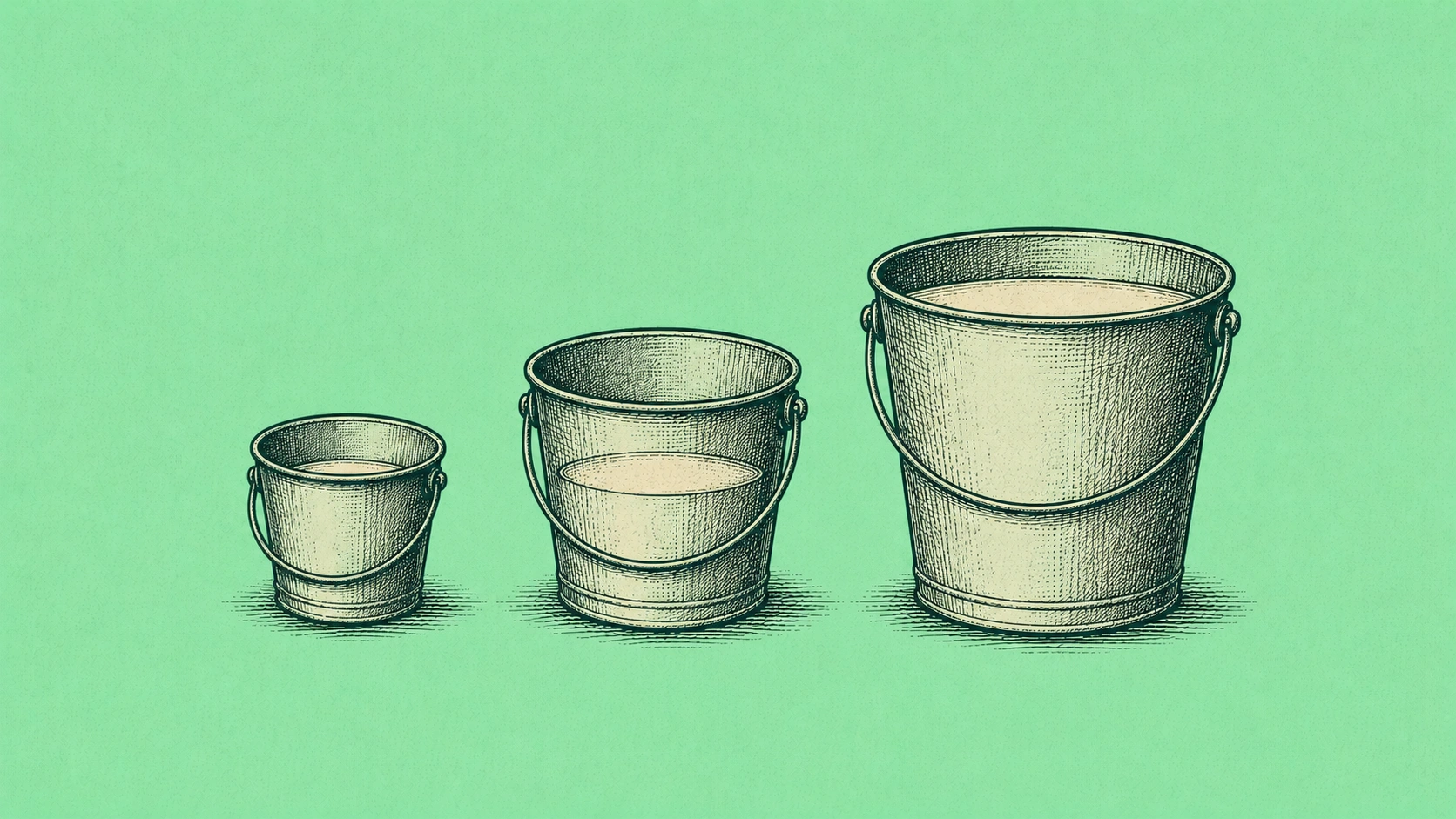
The Framework: Three Buckets, One Question Each
Before the specific allocation, there’s a question that should come first and usually doesn’t: what is this cash actually for?
Most people treat “cash savings” as a monolithic thing, but it isn’t. There’s emergency fund cash (can’t touch it for three months, maybe six). There’s near-term goal cash (house down payment in 18 months, new car next year). And there’s what I’d call float cash — money accumulating without a specific destination, probably should be invested but hasn’t been yet for reasons ranging from “the market feels expensive” to “I haven’t gotten around to it.”
Each of these has a different optimal home, and the answer changes meaningfully based on your actual situation rather than a generic allocation grid.
Emergency fund cash: This stays in an HYSA regardless of rate environment. The best current no-fee HYSA with no minimum is around 4.10% (EverBank). If you’re at Ally earning 3.00%, the switching guide is here. Don’t put emergency fund money in T-bills or CDs — the lock-up defeats the purpose. Emergency funds exist for liquidity, not optimization.
Join The Global Frame
Money, work, and tech — one read every Saturday that actually changes how you think.
Near-term goal cash: This is the most interesting bucket in the current environment. If your goal is 9-18 months out and you’re confident in the timeline, a 6-12 month CD or T-bill ladder is appropriate. You’re capturing a defined rate for a defined period, not speculating on rate direction. A no-penalty CD is the right choice if your timeline has any meaningful uncertainty — more on that here. Current 6-month T-bill at 3.93% is competitive with CD rates, and has the state tax advantage in most states.
Float cash: This is where most people have the most to gain and the least clarity on what to do. If money has been sitting in a HYSA for more than 12-18 months and you still don’t have a specific purpose for it, the cash allocation optimization is almost certainly the wrong frame. That money is probably waiting to be invested. A 4.00% HYSA is nice. The S&P 500’s annualized return over any rolling 20-year period is substantially higher, with more volatility, yes, but also a fundamentally different expected outcome. The income vs investment returns piece covers this tension more directly.
The Specific Allocations by Cash Size
For $10,000 total cash savings:
Keep the full amount in a top-tier HYSA (3.80-4.10%). At this balance, the complexity of splitting across T-bills and CDs isn’t worth the marginal yield gain. Simplicity has value. Focus on being in a competitive HYSA rather than the highest-possible-yield structure.
For $50,000:
$15,000-$20,000 in HYSA as the genuine emergency fund (3-4 months of expenses). $15,000 into a 6-month T-bill or CD ladder — capture a defined rate for money you probably won’t need for a few months. $15,000-$20,000 into a 12-month CD or T-bill if you have medium-term confidence in your cash needs. The no-penalty CD structure works well here if there’s any timeline uncertainty. Remaining in your brokerage’s money market fund if the brokerage holds other investments anyway.
For $200,000+:
FDIC coverage limits start to matter. At $250,000 per institution, spreading across two or three HYSAs is necessary for full coverage — or use Treasury securities directly, which have no equivalent coverage ceiling since they’re backed by the US government. At this level, the T-bill/HYSA allocation decision also moves from “a few hundred dollars a year” to “potentially several thousand” — the optimization is materially worth the attention.
What’s Changed Since January
The urgency of “act now before rates fall further” has faded. Rates stabilized. The people who locked in January captured the best available opportunity. For everyone else, the current environment requires less panic and more deliberateness.
The fundamentals haven’t changed: keeping all your savings in a single HYSA without considering state tax advantages, no-penalty CDs, or brokerage cash sweep optimization is leaving money on the table at almost every balance level. The amounts just feel more like “worth doing someday” than “do this today” when the rate environment isn’t actively falling.
That perception is what the banks are counting on. The optimization is still there. The inertia that prevents it is also still there. The question, six months in, is exactly the same one it was in January: are you going to get around to it or aren’t you?