Somewhere between opening your high-yield savings account and today, your bank quietly reduced your rate. You probably didn’t get an email. You might have noticed a tiny number change on your statement, but statements aren’t really designed to make this obvious. The bank lowered your rate, moved on, and assumed — correctly, most of the time — that you wouldn’t do anything about it.
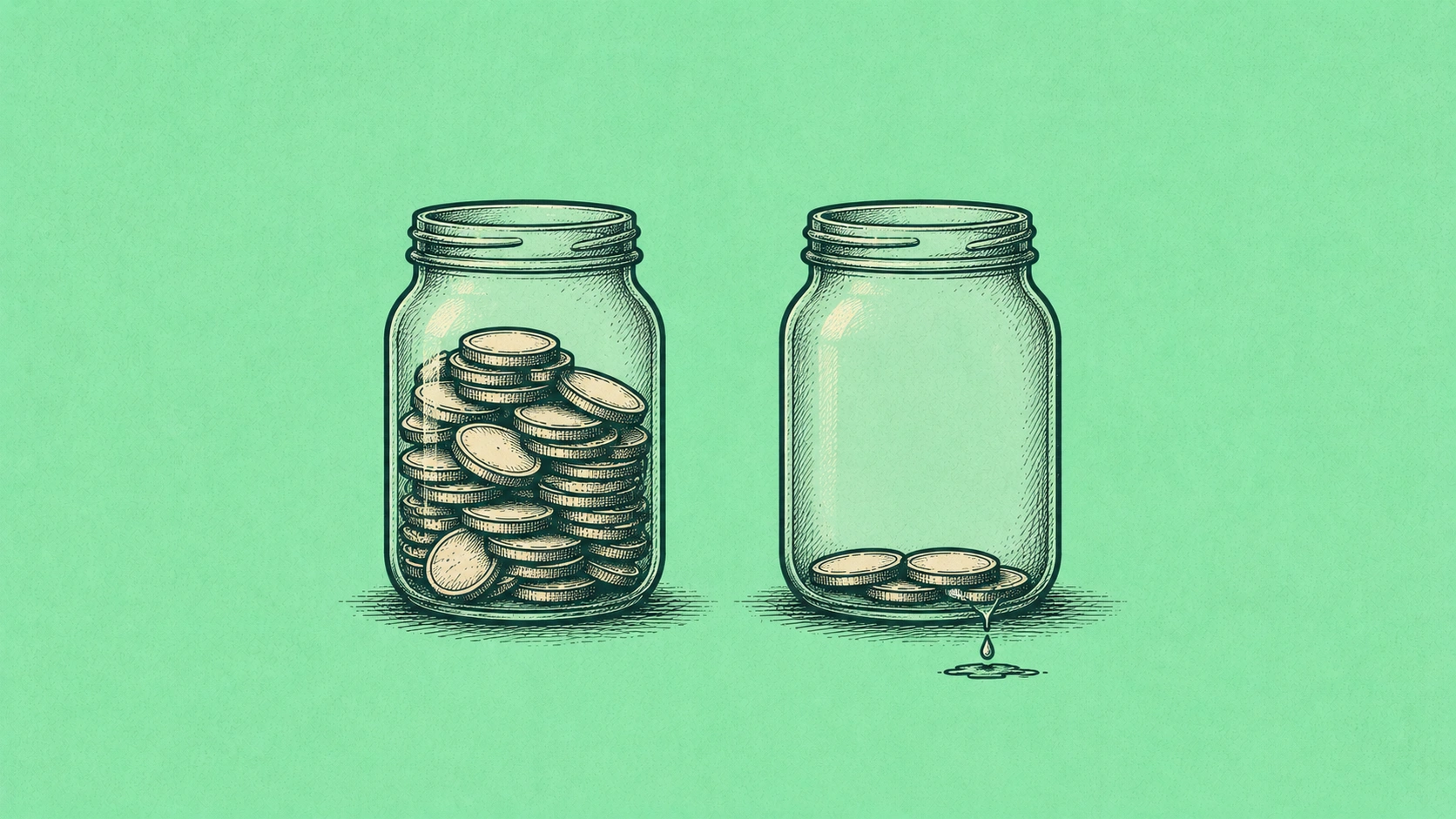
Ally Bank, one of the most popular HYSAs in the country, is paying 3.00% APY as of late June 2026. EverBank Performance Savings is paying 4.10% APY. Marcus by Goldman Sachs is at 3.65%. The gap between the most popular brand-name HYSA and the current rate leaders is more than a full percentage point.
On $50,000, that’s $550 a year. On $100,000, it’s $1,100. On $200,000, it’s $2,200. Not once. Every year you stay.
Banks aren’t doing anything illegal. Variable-rate accounts change. But they’re also not advertising the change, and they’re counting on your inertia to do the rest. This has a name in behavioral economics — it’s called status quo bias — and banks are very good at exploiting it. The question isn’t whether this is happening. It’s whether you care enough to spend 40 minutes fixing it.
Why People Don’t Switch (It’s Not Laziness)
I’ve talked to a lot of people about this. The reason most give for not switching isn’t laziness, exactly. It’s a combination of three things.
First, the hassle feels bigger than it is. You’ve got direct deposits linked to your current bank. You’ve got ACH connections to investment accounts, maybe a mortgage payment pulling from that account. Moving feels like pulling a thread that could unravel something. In practice, re-linking ACH transfers takes about 15 minutes per connection. You do it once.
Second, “what if the new bank cuts its rate too?” is a real objection, and the answer is: yes, it might. The game here isn’t finding a bank that will always be best — it’s periodically checking and moving when the gap is meaningful. You’re not marrying the bank. You’re using it.
Third, people genuinely don’t know how big the gap is because they don’t look it up. If someone told you that your heating bill was $1,100 higher than your neighbor’s identical house because you never called your utility to negotiate, you’d pick up the phone. The HYSA situation is the same. You just haven’t seen the comparison side by side.
The Brands That Bank on Your Brand Loyalty
Not gonna lie — the biggest culprit here is the marketing-heavy HYSAs that built their reputation during the high-rate era of 2023-2024 and have let rates drift since. Some are still competitive. Some aren’t.
Ally built a genuinely good product: no fees, clean interface, the savings bucket feature is legitimately useful for organizing goals. But 3.00% APY in June 2026, when EverBank is paying 4.10% and Western Alliance is at 3.80%, is a real difference. The product quality doesn’t compensate for a 110 basis point shortfall.
Join The Global Frame
Money, work, and tech — one read every Saturday that actually changes how you think.
SoFi Savings requires qualifying direct deposit to earn the headline rate. Without it, you’re at 3.10% — and if your direct deposit situation changes, so does your rate. The conditional structure is something to understand before you assume you’re earning what the ad says.
Marcus by Goldman Sachs tends to stay more competitive relative to the market than Ally has lately. At 3.65%, it’s not the top of the market but it’s not lagging badly. The zero-fee, zero-minimum structure is clean, and Goldman’s backing carries real credibility on the safety question.
The Practical Switching Guide
Here’s how to do this without breaking anything.
Open the new account first, before closing or draining the old one. Fund it with a token amount to get the account active. Verify your identity, go through whatever onboarding they require. This takes a few days.
Update any direct deposits to point to the new account — payroll, government payments, whatever comes in. Give this at least one full payment cycle to confirm the change went through. Keep the old account open and minimally funded during this window.
Move your ACH links one at a time: investment accounts, utility auto-pays, loan payments. Most of these just require logging into the biller and updating a bank account number. It’s boring. It takes 10-15 minutes per connection. Write down what you’ve moved so you have a checklist.
Once a full month has passed with the new account receiving deposits and the old account having no pending transactions, transfer the remaining balance and close the old account (or keep it open with $0 if there’s no fee — useful for backup).
FDIC coverage covers $250,000 per depositor per institution. If you’re above that threshold, you already know to spread across institutions. If you’re not, this is a non-issue.
The Two-Account Structure That Works Best
The setup I’ve landed on, and seen recommended consistently in people who’ve thought about this seriously: keep two accounts. One for access and integration — a bigger brand with good ACH speeds and mobile deposit, probably your “hub.” One for yield — wherever is currently paying the most with no fees and no hoops. Direct deposit goes to the hub. A weekly or monthly auto-transfer moves excess savings to the yield account.
This structure insulates you from the switching friction problem. Your integrations all point to the hub account, which you never need to change. The yield account is your pure savings vehicle — you move money to it, it sits and earns, you don’t need to link anything else to it. When a better rate comes along, swapping the yield account is a one-step process: open the new one, transfer the balance, close the old one. The hub doesn’t move.
The loyalty tax is real. The question is whether you’re paying it by choice or by inattention. Those are very different situations. One of them is fixable in an afternoon, and the fix compounds every year you keep it in place. Check what your HYSA is paying today — right now, before you close this tab. Compare it to what’s currently available. Then decide whether the gap is worth the 40 minutes. For most people holding meaningful savings, it is.
More on how to position your savings across accounts — HYSA, T-bills, CDs — is in the cash optimization guide here. For readers comparing their options, the no-penalty CD is the alternative that captures yield without locking your money, and how rates have already fallen gives full context on why the switching math matters more now than it did a year ago.