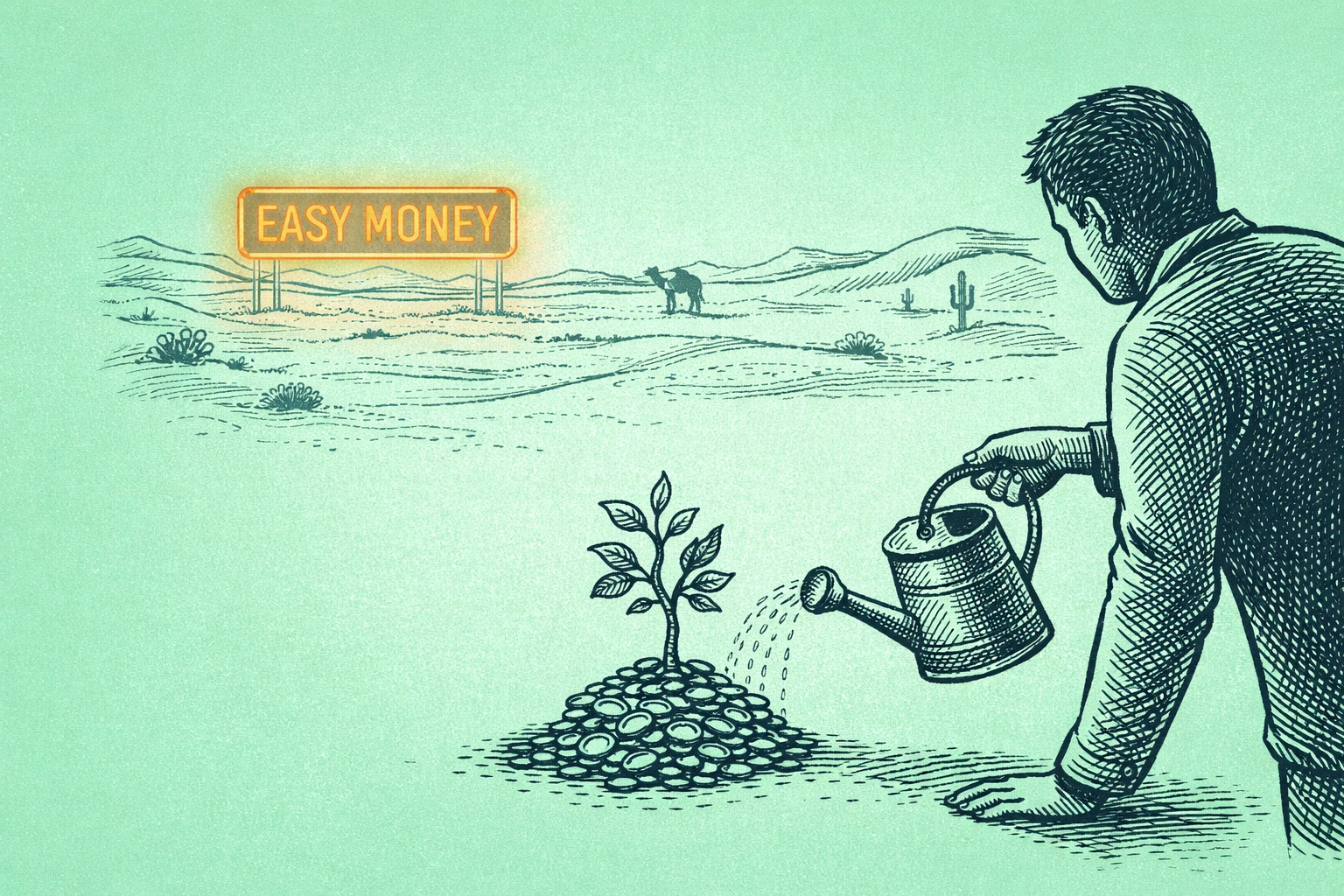
The passive income myth has its own economy now. Courses on how to build passive income. Masterclasses on dropshipping, print-on-demand, Amazon FBA, Kindle publishing, affiliate marketing. YouTube channels dedicated to YouTube channels. The market for learning how to stop working is, ironically, one of the most labor-intensive industries on the internet — and one of the most profitable. Not for the students. For the teachers.
That’s the tell. When someone’s primary income comes from teaching a system rather than running it, the system is you. The $3.4 billion the affiliate marketing industry lost to fraud in 2022 alone — fake traffic, cookie stuffing, spoof websites — is the ugly infrastructure underneath an industry built on the promise that you can earn money without being present for it. The Federal Trade Commission has been methodically dismantling schemes like “Click Profit,” which charged people tens of thousands of dollars for AI-powered sales systems that generated income for exactly one party: the person selling the system. This pattern doesn’t repeat because people are stupid. It repeats because the promise is genuinely appealing and the math gets obscured until after you’ve paid.
Passive income exists. That part is true. The passive income myth isn’t that residual income is impossible — it’s the version being sold: fast, automated, scalable from zero, achievable without capital. That version is almost entirely fiction, and the fiction is expensive.
What the Real Numbers Say
81% of people who start passive income side hustles quit within six months. That’s not a failure of discipline. It’s a rational response to bad math finally becoming visible. Take the most-promoted category: YouTube. 720,000 hours of video are uploaded to the platform every day. To reach YouTube’s monetization threshold, you need 1,000 subscribers and 4,000 watch hours — and once you’re there, the average revenue per thousand views runs $3 to $5. Generating $1,000 a month means 200,000 to 330,000 views every month, indefinitely, on a platform whose algorithm requires consistent new uploads to maintain visibility. That’s not passive income. That’s a content production job with unpredictable compensation.
Dividend investing is the version that actually works — and the version that almost nobody talks about honestly, because the honest version is boring. The S&P 500’s average dividend yield sits at 1.1%, the lowest in a quarter century. At that yield, generating $1,000 a month requires $1.09 million invested. That number isn’t a secret or a trick. It’s just arithmetic that the passive income content industry prefers not to show you, because it would end the conversation before the course sale.
Move toward higher-yield positions and the math improves, though the timeline doesn’t collapse. Realty Income, which has raised its dividend 132 times since 1994, currently yields 5.8% — meaning $207,000 invested generates roughly $12,000 a year. Enterprise Products Partners yields 7.2%, with 27 consecutive years of distribution increases, reducing the required investment to around $167,000 for the same annual income. These are not lottery tickets. They’re compounding machines that reward patience and punish the expectation of shortcuts. The barbell approach to investing — anchoring a portfolio in these reliable yield generators while allocating a smaller portion to higher-risk, higher-upside positions — is how the math eventually starts to work in your favor.
What the influencer economy won’t show you is the sequencing. You cannot passive-income your way out of having no capital. The actual formula — earn more from active work than you spend, invest the difference consistently over years, reinvest dividends, and raise the savings rate whenever income rises — produces real passive income. It just takes a decade, not a weekend. Invest $2,000 a month at an 8% average return and you reach $500,000 in roughly fourteen years. A $500,000 portfolio yielding 6% generates $2,500 a month. That’s real money. It’s also not the story anyone is paying $2,000 to hear.
The Account the Passive Income Industry Never Mentions
Everything above assumes you’re building toward a dividend portfolio with taxable money. It doesn’t have to be. There’s a vehicle that routes the same compounding logic through the most tax-efficient structure in the US tax code — and the passive income content ecosystem ignores it almost entirely, presumably because it requires an employer plan to access and doesn’t work as a weekend course topic. The channel that actually deserves more attention is the one that comes with a government subsidy attached. Health Savings Accounts are, structurally, the most tax-efficient investment vehicle available to most Americans — more efficient than a Roth IRA in several meaningful ways — and they’re almost never discussed in the passive income content ecosystem, presumably because they don’t have the same story arc as dropshipping.
If you carry a high-deductible health plan, your HSA contributions are tax-deductible going in, grow tax-free inside the account, and come out tax-free when used for medical expenses. After 65, withdrawals for any purpose are taxed as ordinary income — identical to a traditional IRA. The 2026 contribution limits are $4,300 for individuals and $8,550 for families. Invested in dividend-producing assets inside the HSA, this becomes a compounding vehicle that no other account structure can match on an after-tax basis. Healthcare costs in retirement average $315,000 per couple. The HSA is, in practice, a retirement account that the government has designed specifically to handle that liability — and most people are leaving it in cash.
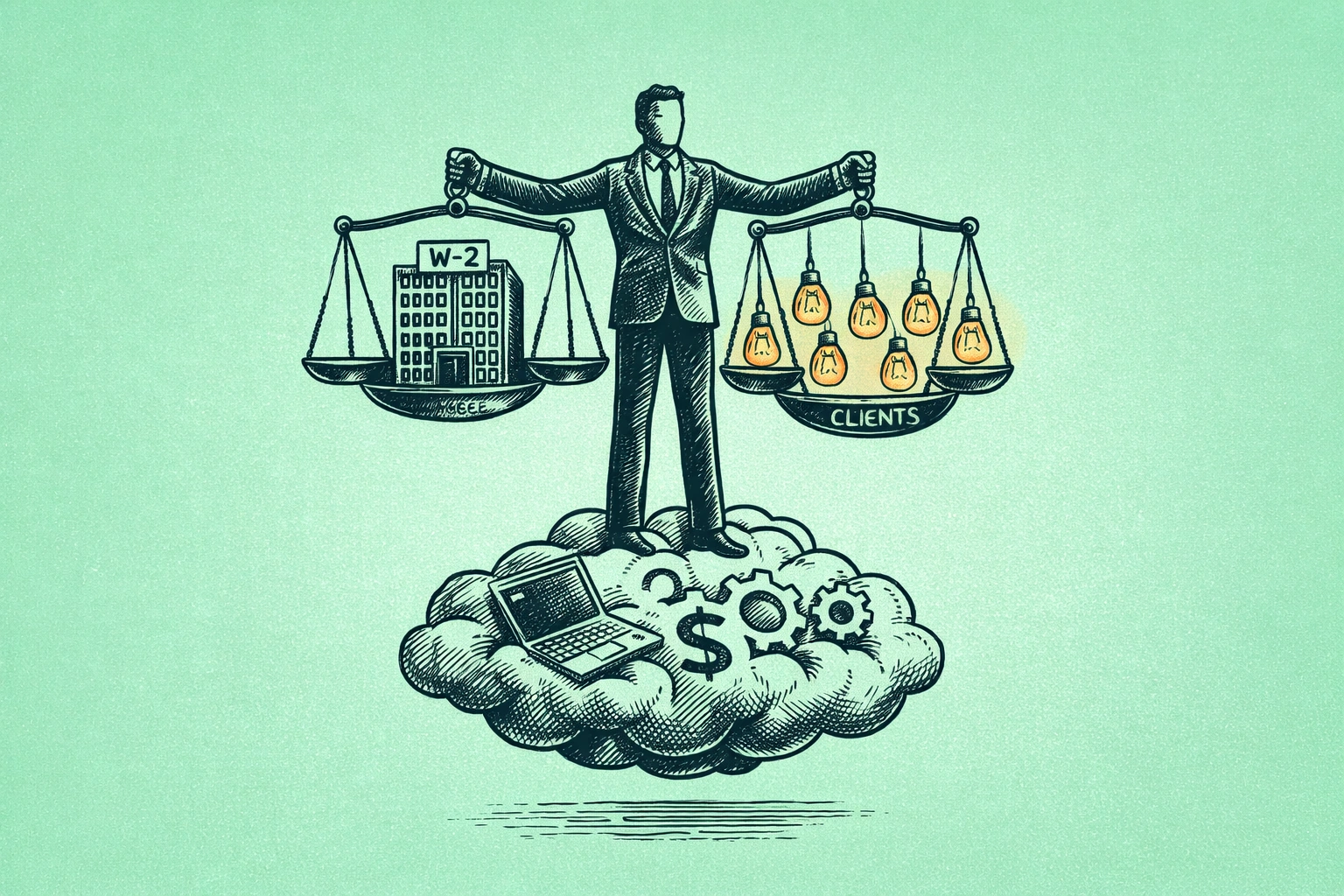
The Solo 401(k) for freelancers and self-employed workers is the other underused mechanism. The contribution limit reaches $70,000 — nearly three times the $23,500 employee cap for standard W-2 employees — because the self-employed contributor acts as both employee and employer. At that contribution level, the tax deferral alone represents a meaningful annual return before the underlying investments do anything. These instruments don’t make for compelling YouTube content. They make for a materially different financial position over fifteen years, which is the actual goal.
Join The Global Frame
Money, work, and tech — one read every Saturday that actually changes how you think.
What Front-Loaded Actually Means
The honest framing for passive income — the one that survives contact with reality — is front-loaded work. You invest significant effort now, building something that requires less ongoing attention later. A dividend portfolio requires research, position sizing, and periodic rebalancing. A blog monetized through affiliate relationships requires months of SEO work, content creation, and link building before the income becomes consistent. A rental property requires capital, renovation, tenant screening, and ongoing maintenance that never fully disappears. The compounding assets that generate durable income all share this structure: asymmetric time investment, weighted toward the beginning.
This blog generates $500 to $800 a month from AdSense and affiliate links after fourteen months of work. The initial articles required twenty to thirty hours each. Monthly maintenance runs about five hours. That’s real passive income by any reasonable definition — and it was preceded by a substantial period of active work that produced nothing financially. The dropshipping course doesn’t mention that part. It mentions the $800 a month.
The passive income myth doesn’t survive the question: where does the money come from? Every dollar of passive income traces back to either capital someone spent years accumulating, work someone did in advance and continues to maintain, or a platform’s willingness to share revenue in exchange for content that serves its own growth. None of those sources are passive at the origin. The distance between the work and the check is what gets sold as freedom — and that distance is real, for people who’ve done the work. The shortcut is the myth. The destination is not.