I spent a long time watching smart, high-earning people make the same financial mistake without realizing it. They paid their credit card bills on time every month and treated that as a win. What they weren’t doing was looking at what the minimum payment was actually doing to their balance.
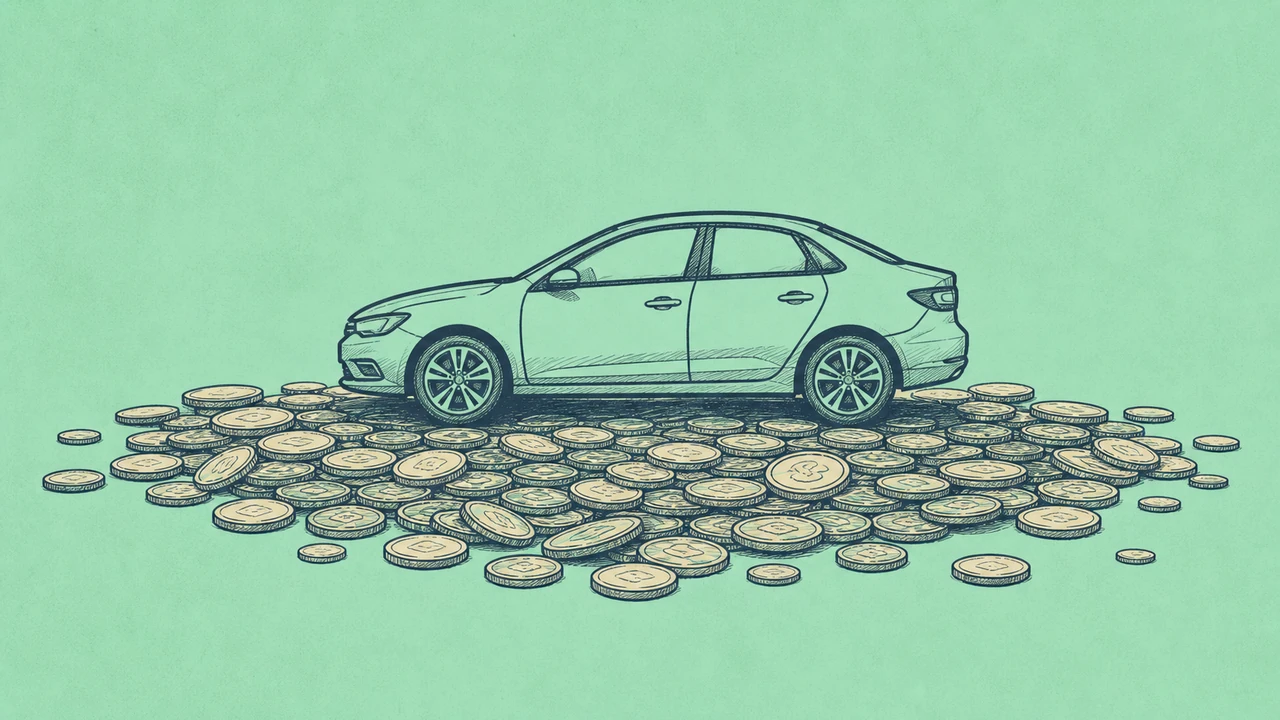
Here’s the math most statements won’t walk you through. The average credit card APR in 2026 is 22.76%, according to Federal Reserve data. On a $10,000 balance at 24% interest, making only the minimum payment means 24-plus years to pay it off. By the time it’s gone, you’ve paid more than $20,000 in interest alone. You borrowed ten thousand dollars. You pay back more than thirty thousand.
That’s not interest. That’s a business model. The bank’s.
Credit card delinquency — balances 90 days or more past due — hit 13.1% in Q1 2026, the highest rate in 15 years, per the New York Federal Reserve. Twenty-eight percent of Americans say they’re worried about covering even the minimum payment. That isn’t a budgeting failure. It’s what happens when the product is designed to keep you paying as long as possible.
Why Minimum Payments Are Designed to Keep You in Debt
The minimum is typically calculated as a percentage of your current balance — around 2%. On a $5,000 balance at 22% APR, your minimum starts at roughly $100 per month. Of that, about $92 covers interest. Eight dollars reduces what you actually owe.
As the balance drops, the minimum drops with it. You’re paying less every month while interest compounds on the remaining balance. There is no mechanism in this system that helps you pay faster. Every mechanism is designed to help them earn longer.
The impact of a small change is significant. Adding $50 per month above the minimum on a $10,000 balance at 24% APR saves $10,400 in total interest and cuts the payoff timeline from 24-plus years to under seven. Fifty dollars. The cost of two dinners. The difference between a quarter century of debt and five years.
Avalanche vs Snowball — The Honest Answer
Two methods dominate debt payoff conversations. Both work. They work for different people.
The avalanche method targets the highest-interest balance first. Mathematically optimal — you pay the least total interest over time.
The snowball method targets the smallest balance first. Mathematically, it costs more. For a significant number of people, it’s the one that actually gets them out of debt.
Join The Global Frame
Money, work, and tech — one read every Saturday that actually changes how you think.
This isn’t a math problem. It’s a behavior problem. Paying off a small balance and seeing it hit zero is a tangible win that keeps momentum going. The correct method is the one you’ll actually follow through on. Getting to zero matters more than theoretical efficiency.
The Balance Transfer: Use It Like a Weapon
A 0% APR balance transfer card for 15 to 21 months is one of the most effective debt tools available. Every dollar you pay goes directly to principal. Balance transfer fees run 3–5% of the amount transferred — on $5,000, that’s $150–$250 upfront, still a fraction of what you’d pay in interest otherwise.
What kills the strategy: treating the transfer as relief instead of as a deadline. The balance moves, the urgency fades, minimum payments resume, and when the promotional rate expires the remaining balance hits 22% again. The transfer bought time. Use it.
Calculate exactly what you need to pay per month to hit zero before the promotional period ends. That number is non-negotiable. The promotional period is a runway, not a rest stop.
The Shift That Actually Changes Things
The reason most people stay in credit card debt for years isn’t a lack of willpower. It’s that they treat the balance as a monthly bill rather than an emergency.
Bills get managed. Emergencies get solved.
Managing a credit card balance means paying the minimum, noting the number, moving on. Treating it as an emergency means redirecting every available dollar toward it until it’s gone — the same urgency you’d have if your furnace broke in January.
The people who clear significant credit card debt aren’t the ones who found the cleverest strategy. They’re the ones who stopped tolerating the balance as a permanent feature of their financial life. Your long-term wealth doesn’t compound while you’re paying 22% on revolving debt. That’s the actual cost of waiting another month to treat this like the emergency it is.
Your bank has been patient about your balance for years. That patience isn’t generosity. It’s how they make money. Debt payoff is step one. Where your actual budget problems are hiding is the related question — and once the balance is gone, the compounding math that was working against you starts working for you instead.