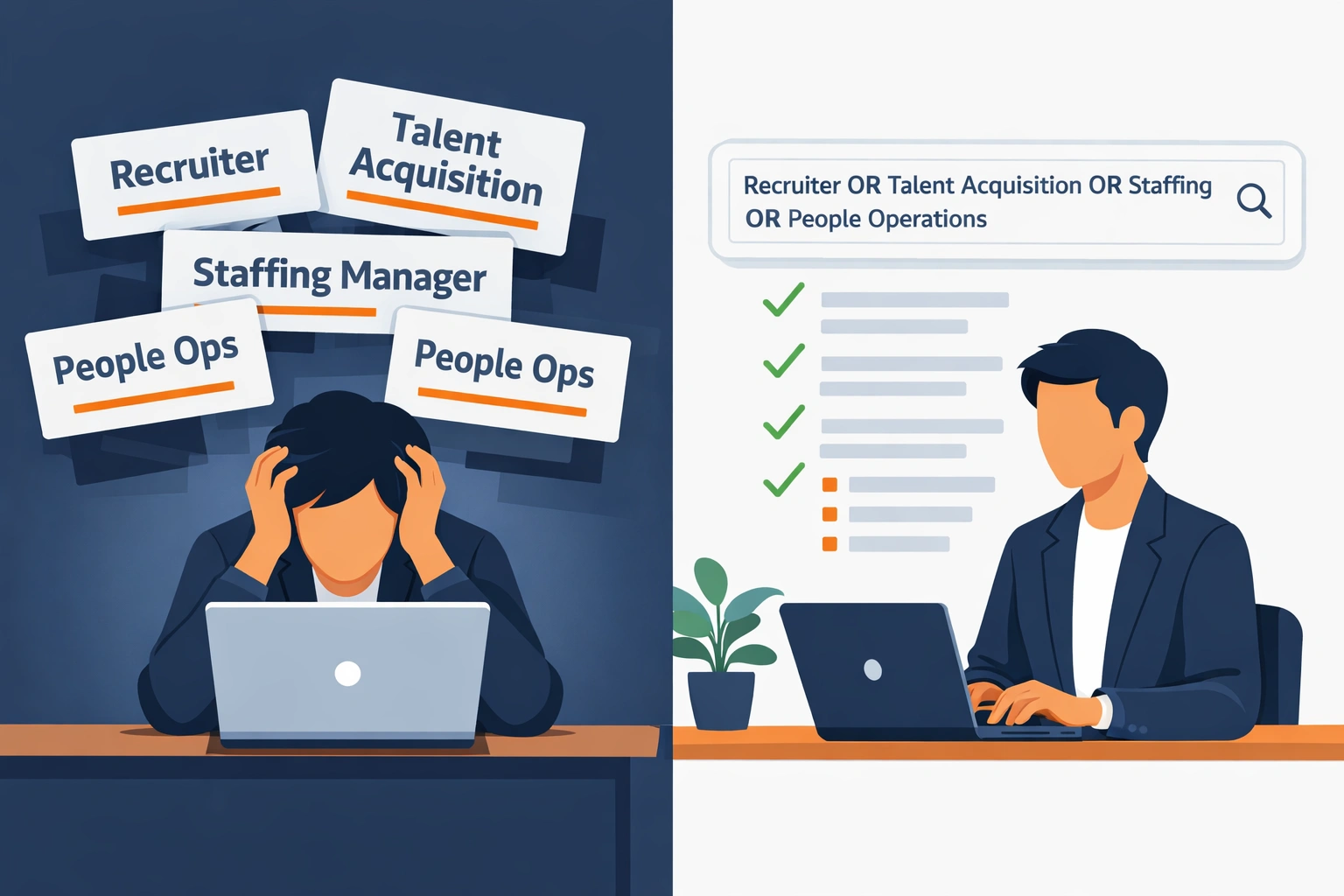
The $268 million resume-improvement industry wants you terrified of robots. They’ve convinced millions of job seekers that Applicant Tracking Systems are digital gatekeepers auto-rejecting 75% of resumes before humans see them. It’s effective marketing. It’s also bullshit.
The ATS myth survives because it offers convenient misdirection. While you’re stressing about keyword density and single-column formatting, the actual filter—human network effects—is quietly deciding who gets hired. You’re optimizing your resume for software that doesn’t reject you while ignoring the system that does.
Here’s what nobody wants to tell you: referrals account for 7% of applications but 40% of hires. The real barrier isn’t passing the ATS. It’s getting into rooms where decisions happen.
The Stat That Built an Industry (and Doesn’t Exist)
“75% of resumes never get read by a human.”
You’ve seen this everywhere. Career coaches cite it. LinkedIn influencers repeat it. Resume services sell on it. One problem: the statistic is fake.
HR consultant Christine Assaf tracked down the origin. It traces to Preptel, a now-defunct resume service company that went out of business in 2013. No study. No methodology. No data. Just a marketing claim that got laundered into “common knowledge” through repetition.
Recent research proves the opposite. Enhancv interviewed 25 recruiters across tech, healthcare, and finance. Result: 92% of recruiters do NOT configure their ATS to auto-reject candidates based on content. The remaining 8% use it only for strict binary criteria like “fewer than 7 of 10 required technical certifications.”
Jobscan surveyed 384 recruiters in 2025. Finding: 99.7% use keyword filters to prioritize candidates, not eliminate them. The ATS organizes applications. Humans make rejection decisions.
The Interview Guys investigated how major systems actually work by interviewing recruiters at Amazon, Google, and Microsoft. Conclusion: “None of the major ATS systems automatically reject resumes or hide them from recruiters. ATS systems primarily help organize applications, not filter them out.”
So why does the myth persist? Because it serves the resume industrial complex. As one LA recruiter told Enhancv: “It’s a false narrative that takes advantage of people. It’s a shame they resort to scare tactics.”
Join The Global Frame
Money, work, and tech — one read every Saturday that actually changes how you think.
The $268 million resume-writing market needs you anxious about algorithms. Otherwise, you might realize the uncomfortable truth: the filter isn’t technical. It’s social.
What ATS Actually Does (Boring but Important)
Applicant Tracking Systems are databases with search functions. That’s it.
When you submit a resume:
- Parsing: The ATS attempts to extract structured data—name, email, job titles, skills. Success rate varies, but both PDF and Word formats work fine in modern systems.
- Storage: Your resume goes into a searchable database alongside hundreds of others for that position.
- Search/Filter: Recruiters use keyword searches and filters (years of experience, location, work authorization) to build shortlists.
- Human Review: A recruiter scans resumes that match their search criteria and decides who advances.
The system doesn’t “reject” you. It surfaces you or doesn’t based on how recruiters search. If they search for “Python + machine learning” and your resume says “ML with Python,” you might not appear. Not because the ATS rejected you, but because the recruiter’s search query didn’t match your phrasing.
This creates real problems—but they’re different from the “robot rejection” narrative you’ve been sold.
The Actual Problem: Volume, Not Algorithms
Entry-level roles average 400-600 applicants. Customer service or remote positions exceed 1,000 in the first week. Tech and engineering postings hit 2,000+ rapidly.
A single recruiter scanning 2,000 resumes at 7 seconds each requires 4 hours of pure review time, assuming zero interruptions. Nobody has that bandwidth. So recruiters build shortlists using whatever heuristics let them process volume: keyword searches, employment gaps, job title matching, and—critically—application order.
“First-come, first-served,” admitted one VP of HR to Enhancv, “because I don’t have time to review thousands.”
Research by Jobscan found that 76.4% of recruiters start by filtering on skills keywords. Second priority: years of experience (68.2%). Third: job titles (62.4%). Location, education, and employment history follow.
Notice what’s missing? “ATS compatibility score.”
The bottleneck isn’t software—it’s human attention under load. When 1,000 applications arrive for a single role, recruiters triage using search filters to get the pile down to something manageable (20-50 resumes). They’re not configuring rejection rules. They’re drowning in volume and using search to survive.
You’re not competing against an algorithm. You’re competing for finite attention in an environment structurally designed to favor speed over depth.
Network Effects: The Filter You’re Ignoring
While the resume industrial complex distracts you with keyword optimization, here’s what’s actually happening:
Referrals represent 7% of applications but account for 40% of all hires.
Let that sink in. If job-seeking were a fair meritocracy based on resume quality, referrals should also account for 7% of hires. Instead, they’re 5.7x more likely to convert.
Why? Because referrals bypass the volume problem entirely.
Employee referrals make up 30-50% of all new hires despite being a tiny fraction of applicants. Referred candidates are 4x more likely to be offered a job than applicants from job boards. They’re 8x more likely to be hired than LinkedIn Easy Apply submissions.
This isn’t about qualifications. It’s about trust and attention. When someone internally vouches for you, the hiring manager actually reads your resume instead of scanning it for 7 seconds in a stack of 400.
Data from multiple sources shows:
- Referral hires stay 70% longer than non-referral hires
- 45% of referral hires remain for 4+ years vs. 25% from job boards
- Referred employees generate 25% more profit for companies
- 82% of employers rate referrals as their best ROI
Companies know this. That’s why 88% of employers believe referrals yield the highest quality candidates. It’s why 70% of companies offer $1,000-$5,000 cash bonuses for successful referrals.
The system isn’t broken—it’s working exactly as designed. It’s just not designed around your perfectly keyword-optimized resume.
The Hidden Job Market: 70% You Never See
Research consistently shows that 70% of positions are filled before they’re publicly posted. They’re filled through:
1. Internal promotions (21% of hires). The first place companies look is their existing workforce. Why risk an unknown external candidate when you can promote someone already proven?
2. Employee referrals (30-50% of hires). Structured programs with financial incentives make this the largest single hiring channel.
3. Recruiter sourcing (19% of hires). Headhunters reach out directly to passive candidates in their networks. These roles rarely touch job boards.
Combined, these three channels account for 70-90% of placements. Which means public job postings—the ones you’re obsessively optimizing your resume for—represent 10-30% of actual hiring.
You’re fighting for scraps while the real market operates on a different layer entirely.
The ROI Problem with Resume Optimization
Let’s do the math on where your effort should go.
Scenario A: Perfect Your Resume
- Time investment: 20 hours (research, rewrites, ATS testing tools)
- Applications sent: 100
- Response rate: 2-3% (standard for online applications)
- Interviews: 2-3
- Offers: 0.5 (assuming 25% interview-to-offer conversion)
Scenario B: Build Network Access
- Time investment: 20 hours (informational interviews, LinkedIn outreach, alumni connections)
- Referrals generated: 3-5
- Response rate: 40-55% (referral interview rate)
- Interviews: 2-3
- Offers: 0.75-1.0 (assuming 30% interview-to-offer conversion)
Same time investment. Higher probability of outcome. Better quality conversations.
Yet 99% of career advice focuses on Scenario A because it’s easier to sell. “Fix these 7 resume mistakes” generates clicks. “Develop genuine relationships that create mutual value over months” doesn’t.
What Actually Works (Uncomfortable Edition)
If you’re applying to roles on LinkedIn Easy Apply or Indeed, you’re already late. Those postings are visible because the hiring manager couldn’t fill them through referrals or internal candidates. You’re competing in the discount bin.
High-value positions get filled through back channels:
1. Direct relationships. Hiring managers hire people they know or people known by people they trust. This isn’t nepotism—it’s risk mitigation. External candidates are expensive bets ($4,285-$18,000 per hire plus 6-12 months to productivity). Referrals reduce both financial risk and uncertainty.
2. Warm introductions. Cold applications have ~2% response rates. Warm introductions (where someone internally connects you to the hiring manager) have 40-60% response rates. The difference isn’t your resume—it’s context and credibility.
3. Visibility before need. The best “applications” happen before roles are posted. You meet a director at a conference, add value during a project, or publish something that demonstrates expertise. When their team has headcount, you’re already on the shortlist. No ATS required.
This doesn’t mean resumes are irrelevant. Once you get the interview, the resume matters. But optimizing your resume without building network access is like perfecting your putting while ignoring that you’re on the wrong golf course.
The Psychology of Optimization Traps
Why do smart people spend 20 hours perfecting resumes and 0 hours networking?
1. Tangible vs. Intangible. Resume optimization feels productive. You can see the changes. Track keyword density. Test formatting. Networking feels vague—”go meet people” doesn’t come with clear metrics or completion states.
2. Control vs. Uncertainty. You control your resume. You can’t control whether someone will respond to outreach or whether a connection will lead anywhere. Humans prefer low-probability actions they can control over high-probability actions dependent on others.
3. Short-term relief vs. Long-term results. Submitting 50 perfectly formatted resumes provides immediate satisfaction. Building a network requires months of groundwork with no immediate payoff. The delayed gratification problem kills effective strategy.
4. Industry marketing. The resume optimization industry has convinced job seekers that the barrier is technical (ATS compatibility) rather than social (network access). This is convenient for them—they can sell you solutions. They can’t sell you genuine relationships.
The result: millions of job seekers optimizing for a bottleneck that doesn’t exist while ignoring the filter that determines 70% of outcomes.
What to Do Instead
Stop: Obsessing over ATS-compatible formatting, keyword stuffing, or expensive resume rewrites.
Start: Building relationships that create context before you need them.
Practical Network Leverage (Not Networking Events)
1. Informational interviews. Reach out to people doing roles you want, offer to buy them coffee (virtual or real), and ask about their path. Not for jobs—for information. Half will ignore you. The other half will talk. Some percentage become advocates when roles open.
2. Internal referral targeting. Find companies you want to work for. Identify employees on LinkedIn. Reach out with genuine questions about their experience or projects. Make the interaction valuable for them (share an insight, offer an intro, write a thoughtful comment on their work). Create relationships, not transactions.
3. Public work. Write, speak, build, or contribute in visible ways related to your domain. One well-researched blog post or GitHub project generates more inbound opportunities than 100 applications. Visibility creates serendipity.
4. Alumni networks. Your college alumni network is pre-warmed. People are weirdly willing to help fellow graduates. Use it.
5. Strategic applications. If you must apply online (sometimes unavoidable), apply within the first 24-48 hours of posting and simultaneously identify someone at the company to message. “I just applied for [role] and wanted to reach out directly.” Even a 10% response rate beats pure application volume.
Resume Baseline (Stop Overthinking It)
Your resume still matters—once you get the interview. Baseline requirements:
- Clean format. Single-column, standard fonts (Arial, Calibri, Times), clear section headers. PDF or Word both work fine.
- Keyword matching. Include relevant skills and technologies from the job description naturally throughout. Don’t keyword stuff—just use their language.
- Quantified results. “Increased revenue by 30%” beats “responsible for revenue growth.” Show impact with numbers.
- Job title alignment. If the role is “Product Manager” and you were “Product Lead,” use “Product Manager” if the responsibilities match. Title consistency matters more than formal job titles.
- No obvious parsing problems. Avoid tables, text boxes, headers/footers with critical info, or weird formatting. Test once using Jobscan or Resume Worded. Fix any major issues. Move on.
That’s it. You don’t need a $500 resume rewrite. You need one that’s 90% clean and then you need to focus on how it gets in front of decision-makers.
The Brutal Truth About Modern Hiring
Hiring is fundamentally a risk-management exercise, not a meritocratic evaluation of resumes.
Companies pay recruiters $4,285-$18,000 per hire. New employees take 6-12 months to reach productivity. Bad hires cost 1.5-2x annual salary in opportunity cost, team disruption, and replacement time.
Given that risk profile, why would a hiring manager trust a random resume over someone vouched for by an employee they already trust?
They wouldn’t. And they don’t.
Studies show that 88% of employers believe qualified candidates get screened out by their process—not because ATS rejects them, but because their resumes never get human attention in a pile of 1,000.
The problem isn’t that you’re failing the ATS. The problem is that your resume never reaches the top of a recruiter’s priority queue because you lack the social context that referrals provide.
The Leverage Asymmetry
Job seekers optimize resumes (low leverage).
Companies optimize for reducing hiring risk (high leverage).
Referrals reduce risk. Resumes create risk.
This asymmetry explains why the system works the way it does—and why fighting the system instead of routing around it is inefficient.
You can’t eliminate the referral advantage. You can’t force companies to process 1,000 applications with equal attention. You can’t make ATS-based screening disappear.
But you can position yourself on the right side of the filter by building the network access that makes your resume actually get read.
Many candidates lose leverage before interviews even begin, which is why understanding how recruiters screen resumes often matters more than interview performance.
The Strategic Shift
Most job seekers treat job searching like a numbers game: more applications → more responses → more interviews → more offers.
High performers treat it like a positioning game: more context → more credibility → more inbound → more options.
The resume industrial complex profits from keeping you in the numbers game because they can sell you marginal improvements in application quality. They can’t sell you the relationships that create genuine leverage.
But the data is clear:
- 70% of positions filled before public posting
- 40% of hires from referrals despite 7% of applications
- 4x higher hiring rate for referred candidates
- 82% of employers rate referrals as best ROI
Optimizing your resume while ignoring network access is like perfecting your pitch deck while refusing to talk to investors. The deliverable matters, but distribution determines outcomes.
Stop Fighting the Wrong Battle
ATS isn’t your enemy. Volume is your enemy. Invisibility is your enemy.
The resume industrial complex wants you focused on formatting and keywords because it keeps you buying their solutions. Career coaches repeat the ATS myth because it justifies their existence.
Meanwhile, referred candidates are walking past the entire pile of 1,000 applications and having actual conversations with hiring managers.
You can keep perfecting your resume and sending it into the black hole of online applications. Or you can recognize that the game isn’t about beating software—it’s about building relationships that bypass the pile entirely.
The choice is yours. But at least now you know which filter actually matters.