I was helping a friend with their job search last week and we had this surreal moment.
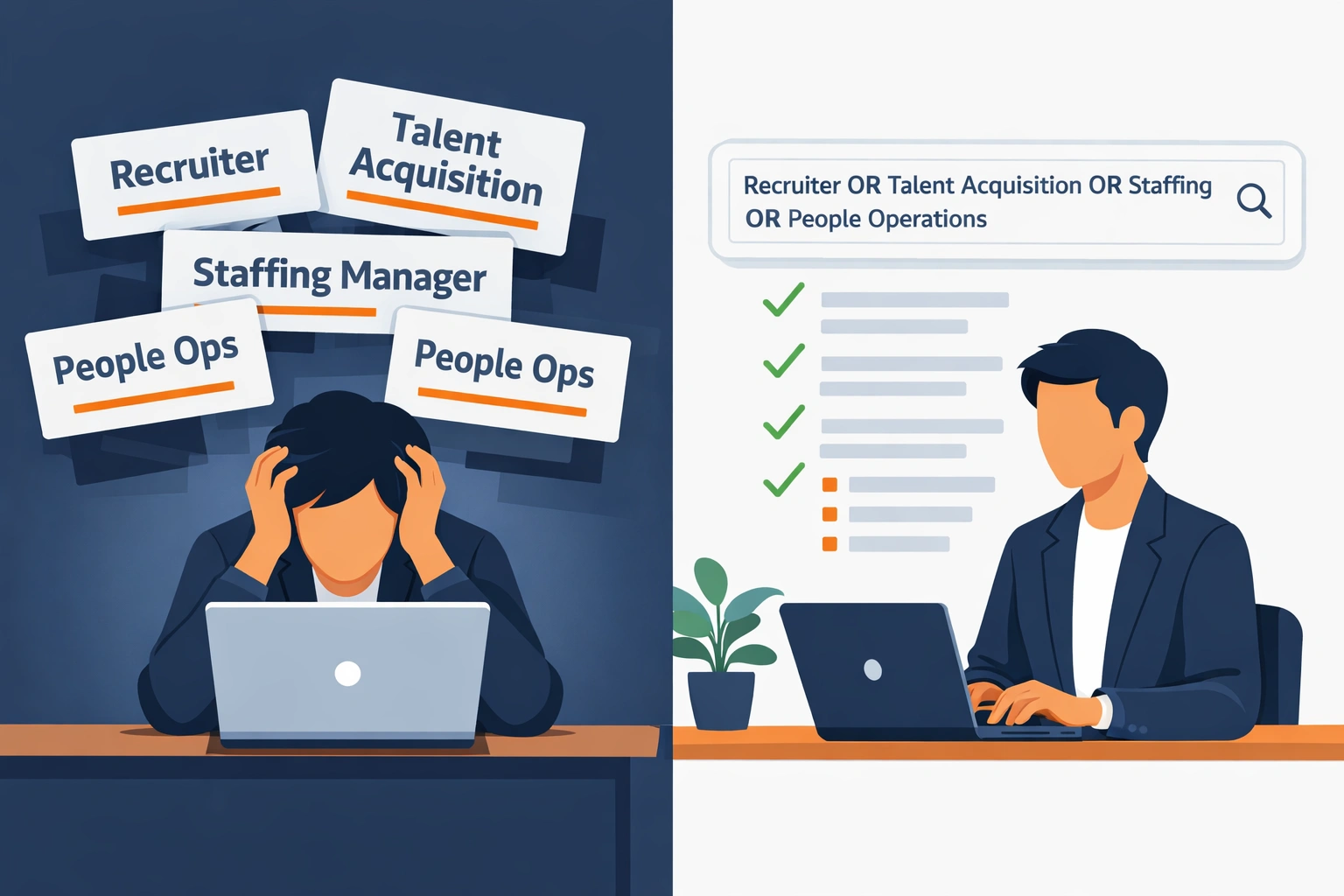
They’ve been in recruiting for years. They know what they do. But when they typed “Talent Acquisition” into LinkedIn, they got 8,000 results. Then tried “Recruiting Manager.” Another 12,000 results—completely different jobs. Then “People Operations Lead.” Different set again.
Wait. These are all… the same job?
Then it hit us: they’d probably missed hundreds of opportunities because they weren’t searching for the right synonym. And half the jobs they were looking at had inflated titles that made them think, “Am I even qualified for this?”
If you’ve ever felt that doubt scrolling through job listings—”Is this actually a senior role or are they just calling it that?”—you’re not crazy. Job titles in 2026 are fundamentally broken.
The same role gets called seven different things across seven companies. Entry-level jobs get “Senior” slapped on them. And nobody seems to care that this is costing people real opportunities.
Here’s what’s actually happening, why it’s getting worse, and how to navigate it without losing your mind.
The Two Ways Job Titles Are Sabotaging Your Search
There are two distinct problems, and they both mess with you in different ways.
Problem 1: Title Chaos (You’re Missing 60% of Relevant Jobs)
The same job has a dozen different names, and you’re only searching for one of them.
Real examples:
Join The Global Frame
Money, work, and tech — one read every Saturday that actually changes how you think.
A recruiter at Google is called a “Staffing Lead.”
At Amazon, it’s “Recruiting Manager.”
At Microsoft, it’s “Talent Acquisition Lead.”
At Meta, it’s “Talent Partner.”
At startups, it’s often just “People Ops.”
Same job. Five completely different searches. If you only search “recruiter,” you’re missing 80% of the opportunities.
Or try this one:
- “Customer Service Rep” (Bank of America)
- “Customer Success Manager” (SaaS startups)
- “Client Success Specialist” (consulting firms)
- “Support Engineer” (tech companies)
- “Customer Experience Associate” (retail)
You could be perfect for all of these roles, but unless you search for every variation, you’ll never see them.
Problem 2: Title Inflation (You’re Doubting Your Own Qualifications)
This one’s more insidious. Companies are inflating titles to make jobs sound more important than they are.
You see “Senior Data Strategist” and think, “Wow, that sounds impressive. I’m probably not qualified.”
Then you read the job description:
- 0-2 years experience required
- Entry-level salary ($45K-55K)
- No management responsibilities
- Reporting to an actual Senior Data Scientist
It’s not a senior role. It’s a junior analyst with a fancy title.
This happens because:
- It sounds impressive – “Senior Strategist” gets more applications than “Coordinator”
- It’s cheaper – Why pay senior salary when you can just change the title?
- Employees feel better – Gives people “promotions” without raises
The problem? You’re sitting there thinking you’re not qualified for jobs you could do in your sleep.
How Did We Get Here? (The Palantir Story)
Job title chaos didn’t start by accident. It started with a calculated strategy.
In 2011, Palantir took their “Solutions Engineers”—traditionally a low-status role—and renamed them “Forward Deployed Engineers.” They even called them “Deltas,” like Delta Force.
It sounded ridiculous. It worked brilliantly.
Why? Because Palantir understood something critical: titles aren’t just labels. They’re signals of value.
By rebranding the role, they attracted high-caliber engineers who would have ignored a “Customer Support Engineer” posting. The title gave the work prestige. Palantir got a hiring moat. Now hundreds of companies hire “FDEs,” but Palantir owns the term.
This worked so well that everyone started copying it.
“IT” became “Software Engineer”
“Data Entry” became “Data Scientist”
“Secretary” became “Chief of Staff”
“Social Media Manager” became “Head of Growth”
Each rename tracked a real shift in the work’s strategic importance. But then companies realized they could game the system: Why not just inflate titles without changing the actual work?
And that’s how we ended up with “Customer Success Ninjas” and “Growth Hackers” doing entry-level email marketing.
The Real Cost: What Title Chaos Is Costing You
Let me be specific about what this chaos actually costs:
1. You Miss 60-70% of Relevant Opportunities
If you only search one title variant, you’re seeing maybe 30-40% of available jobs. The rest are using synonyms you didn’t think to search for.
Let me show you how dramatic this is. Searching “recruiter” on LinkedIn: 8,200 results. Adding OR “talent acquisition” OR “staffing” OR “people operations”: 31,400 results. That’s 23,000 jobs someone would miss by only searching one term.
2. You Don’t Apply to Jobs You’re Qualified For
Title inflation creates imposter syndrome. You see “Senior Growth Strategist” and assume it requires 10 years of experience and an MBA. You don’t apply.
The actual job? Managing a company’s Instagram account with 1-2 years of social media experience required. You’re overqualified.
3. ATS Systems Filter You Out
Applicant Tracking Systems scan for keyword matches between your resume and the job description. If your title is “Talent Acquisition Lead” and they’re searching for “Recruiting Manager,” you might not even make it past the robot—even though you’re doing the exact same job.
Understanding how recruiters actually screen resumes in 2026 is critical, because many of them are dealing with the same title chaos you are.
4. Salary Negotiations Get Messy
When everyone has different titles for the same work, salary benchmarking becomes impossible. Are you underpaid compared to “market rate”? Who knows! Your title is “Marketing Coordinator” but you’re doing the work of a “Growth Manager” at another company making $30K more.
This is why having a solid salary negotiation strategy matters—you need to benchmark on responsibilities, not titles.
The Master List: Common Job Title Synonyms by Field
Here’s the cheat sheet. Bookmark this. These are the most common title variants you need to search for in 2026:
Tech Roles
- Software Developer = Software Engineer = Programmer = Coding Engineer = Application Developer
- Data Analyst = Business Intelligence Analyst = Data Specialist = Insights Analyst = Analytics Engineer
- Data Scientist = Machine Learning Engineer = AI Engineer = Data Engineer = Quantitative Analyst
- DevOps Engineer = Site Reliability Engineer = Platform Engineer = Infrastructure Engineer = Systems Engineer
- Product Manager = Product Owner = Product Lead = Technical Product Manager = Product Strategist
- UX Designer = Product Designer = UI/UX Designer = Experience Designer = Design Engineer
Business & Operations Roles
- Recruiter = Talent Acquisition = Staffing Manager = People Operations = Talent Partner = Hiring Manager
- Project Manager = Program Manager = Project Coordinator = Delivery Manager = Scrum Master
- Business Analyst = Strategy Analyst = Operations Analyst = Process Analyst = Business Systems Analyst
- Operations Manager = Operations Lead = Business Operations = RevOps = Chief of Staff
- Account Manager = Customer Success Manager = Client Success = Relationship Manager = Account Executive
Marketing & Sales Roles
- Marketing Manager = Growth Manager = Marketing Lead = Brand Manager = Marketing Strategist
- Social Media Manager = Community Manager = Content Manager = Digital Marketing Specialist
- Sales Rep = Account Executive = Business Development Rep = Sales Executive = Sales Consultant
- Content Writer = Content Strategist = Copywriter = Content Creator = Brand Writer
Creative Roles
- Graphic Designer = Visual Designer = Brand Designer = Creative Designer = Design Specialist
- Video Editor = Motion Graphics Designer = Video Producer = Multimedia Specialist
- Photographer = Visual Content Creator = Imaging Specialist = Content Photographer
Support & Service Roles
- Customer Service = Customer Success = Client Support = Technical Support = Customer Experience
- Administrative Assistant = Executive Assistant = Office Manager = Administrative Coordinator
- HR Coordinator = People Operations = HR Generalist = Human Resources Specialist
How to Actually Search for Jobs When Titles Are Broken
Okay, enough complaining. Here are the actual tactics that work:
Strategy 1: Master Boolean Search with Title Synonyms
Stop searching one title at a time. Use Boolean operators to search multiple variants simultaneously.
Example search string for LinkedIn/Indeed:
("Recruiter" OR "Talent Acquisition" OR "Staffing" OR "People Operations" OR "Talent Partner") AND ("remote" OR "hybrid")This searches for ANY of those title variants in remote/hybrid roles.
Another example for data roles:
("Data Analyst" OR "Business Intelligence" OR "Analytics Specialist" OR "Data Specialist") AND "SQL" AND NOT "Senior"This finds all data analyst variants that require SQL, excluding senior roles.
Most job boards support this. Use it.
Strategy 2: Search by Skills and Responsibilities, Not Titles
Ignore the job title entirely. Read the actual responsibilities listed.
Instead of searching “Product Manager,” search for:
- “Product roadmap”
- “User stories”
- “Sprint planning”
- “Stakeholder management”
The roles that match these responsibilities are product management roles, regardless of what they’re called.
Skills-based hiring is becoming the standard anyway—companies are starting to care more about what you can do than what your title says.
Strategy 3: Use AI to Decode Inflated Titles
Copy the job description into ChatGPT with this prompt:
"Analyze this job description. Based on the years of experience required, salary range, and actual responsibilities listed, is this actually a [claimed level] role? What level is it really?"ChatGPT will tell you if “Senior Growth Strategist” is really just a junior marketing coordinator. This kills the imposter syndrome instantly.
You can also use AI to optimize your resume to match multiple title variants without lying—it helps you reframe your experience in different terminology.
Strategy 4: Set Up Multi-Variant Job Alerts
Don’t manually search every day. Set up alerts that automatically catch all variants.
On LinkedIn:
- Search using Boolean operators for all title synonyms
- Click “Create search alert”
- Repeat for 5-7 different title clusters relevant to you
Now you’re getting notifications for 5x more jobs without additional effort.
Strategy 5: Ask Directly in the First Interview
Here’s the script:
“I noticed the title for this role is [X]. Can you help me understand how your company defines that level? What would differentiate this from a [junior/mid/senior] [title] role elsewhere?”
This does three things:
- Shows you’re thoughtful about role scope
- Exposes title inflation immediately
- Gives you ammunition for salary negotiation later
How to Spot Fake “Senior” Titles (Red Flags)
Not sure if a “senior” role is actually senior? Look for these red flags:
🚩 Red Flag #1: Years of Experience Required is 0-2 Years
Real senior roles require 5-7+ years minimum. If they’re asking for 0-2 years, it’s an entry-level job with an inflated title.
🚩 Red Flag #2: No Management Responsibilities Listed
Actual senior roles involve mentoring, leading projects, or managing people. If the entire job description is “execute tasks” with no leadership component, it’s not senior.
🚩 Red Flag #3: Salary Range is Entry-Level
Google “[job title] salary [your city]” and compare. If the posted range is 40-60% of what Glassdoor says senior roles pay, the title is inflated.
🚩 Red Flag #4: Reporting to Another “Senior” in the Same Function
If you’re a “Senior Marketing Strategist” reporting to a “Senior Marketing Manager,” something’s off. Real senior roles have more autonomy.
🚩 Red Flag #5: The JD Uses Buzzwords Like “Ninja” or “Rockstar”
This is almost always a sign the company is compensating for low pay or unclear responsibilities with a “fun” title. Run.
The Work-Around: How to Handle Title Mismatches on Your Resume
So what do you do when your official title doesn’t match what you actually did?
Option 1: Use Your Official Title with a Clarification
List your official title, then add a parenthetical that explains the role in standard terms.
Example:
Growth Hacker (Digital Marketing Specialist)
June 2023 - Present
This is honest (you’re not lying about your title) but clarifies for recruiters what you actually did.
Option 2: Lead with Responsibilities, Not Titles
Use a functional resume format that emphasizes skills and accomplishments over job titles. This works especially well if your title significantly undersells your actual work.
Option 3: Update Your LinkedIn to Match Industry Standards
LinkedIn gives you more flexibility than your resume. If your official title is “Administrative Ninja” but you’re actually an Executive Assistant, your LinkedIn can say:
Executive Assistant (Internal Title: Administrative Ninja)This is transparent and searchable. Optimizing your LinkedIn profile with standard title terminology makes you findable by recruiters searching for industry-standard terms.
Option 4: Get Written Approval from Your Manager
If your responsibilities have grown beyond your title, ask your manager for written confirmation that you can use a more accurate title on your resume.
Email template:
“Hi [Manager], as I update my LinkedIn and resume, I wanted to check with you. My official title is [X], but I’ve taken on [Y responsibilities]. Would it be accurate for me to describe my role as [more accurate title]? I want to make sure I’m representing my work correctly.”
Most managers will say yes—it doesn’t cost them anything and helps you professionally.
What’s Coming: Will This Get Better or Worse?
Here’s my honest take: it’s going to get worse before it gets better.
Why it’ll get worse:
- AI is creating entirely new job categories (Prompt Engineer, AI Safety Specialist)
- Remote work means companies compete globally, so they inflate titles to attract talent
- LinkedIn’s job board profits from more job postings, so they have no incentive to standardize
Why it might get better:
- Skills-based hiring is replacing degree and title requirements at major companies
- LinkedIn is testing AI features that group similar roles under one search
- Salary transparency laws are forcing companies to be more honest about role levels
My bet? We’ll see a split:
- Big tech and established companies will standardize titles (Google already has strict leveling)
- Startups and mid-market will keep playing fast and loose with titles to compete
Which means you’ll need to be bilingual: fluent in both standard titles and startup chaos.
The Bottom Line: Don’t Let Broken Titles Cost You Opportunities
Look, job titles are a mess. They’re inconsistent, inflated, and getting worse. But now you know how to navigate it:
Do this today:
- Make a list of 5-7 title synonyms for your target role
- Set up Boolean search alerts using those synonyms
- Stop assuming “Senior” means senior—read the actual responsibilities
Do this tomorrow:
- Update your LinkedIn with standard industry titles (with parenthetical clarifications)
- Run your target job descriptions through ChatGPT to spot inflated titles
- Build a spreadsheet of companies you want to work for and manually check their career pages (titles vary, but companies you want to work for don’t)
Do this this week:
- Join industry-specific Slack/Discord groups where people share real salary + title combos
- Network with people doing the work you want to do (not the title—the actual work)
- Practice asking the “how do you define this level?” question
The companies that care about you as a candidate will respect these questions. The ones that get defensive about title inflation? You probably don’t want to work there anyway.
And remember: when you’re doubting whether you’re “qualified enough” for a role, it’s probably not you. It’s the broken title system making you second-guess yourself.
You’re more qualified than you think. You just need to search for seven different versions of the same job to find it.
Related Reading:
Understanding why you might feel stuck isn’t just about titles—it’s about building the skills that make titles irrelevant. Check out how to become unfireable in your career so you’re not at the mercy of whatever companies decide to call you.