Most promotions are not given. Career advice almost never says this plainly because it’s uncomfortable. They’re negotiated, and the negotiation starts long before the conversation where you ask.
I’ve been watching the 2026 labor market data closely because I think it changes the stakes on this in a way that a lot of people haven’t fully processed yet. External hiring is frozen across most of the economy. 66% of CEOs planned to freeze or cut it through 2026, and the April jobs report showed 115,000 new payrolls against a 4.3% unemployment rate that hasn’t moved since February. In this environment, the conventional career-advancement strategy of waiting to get promoted internally and then jumping externally for a bigger title and salary bump is significantly harder than it was in 2021 or 2022.
What that means practically: for most professionals right now, the internal promotion path is not the backup plan. It’s the primary path. And the people who treat it that way — who understand how promotions actually happen inside organizations and position accordingly — are moving while everyone else is waiting.
The First Thing to Understand: How Promotions Actually Get Made
Most people think promotions work like this: you perform well for long enough, your manager notices, they advocate for you when a role opens, and you get the title and the raise. This model is accurate enough that it doesn’t seem wrong — and wrong enough that it consistently fails the people who follow it exclusively.
Why the 2026 Labor Market Changes the Stakes
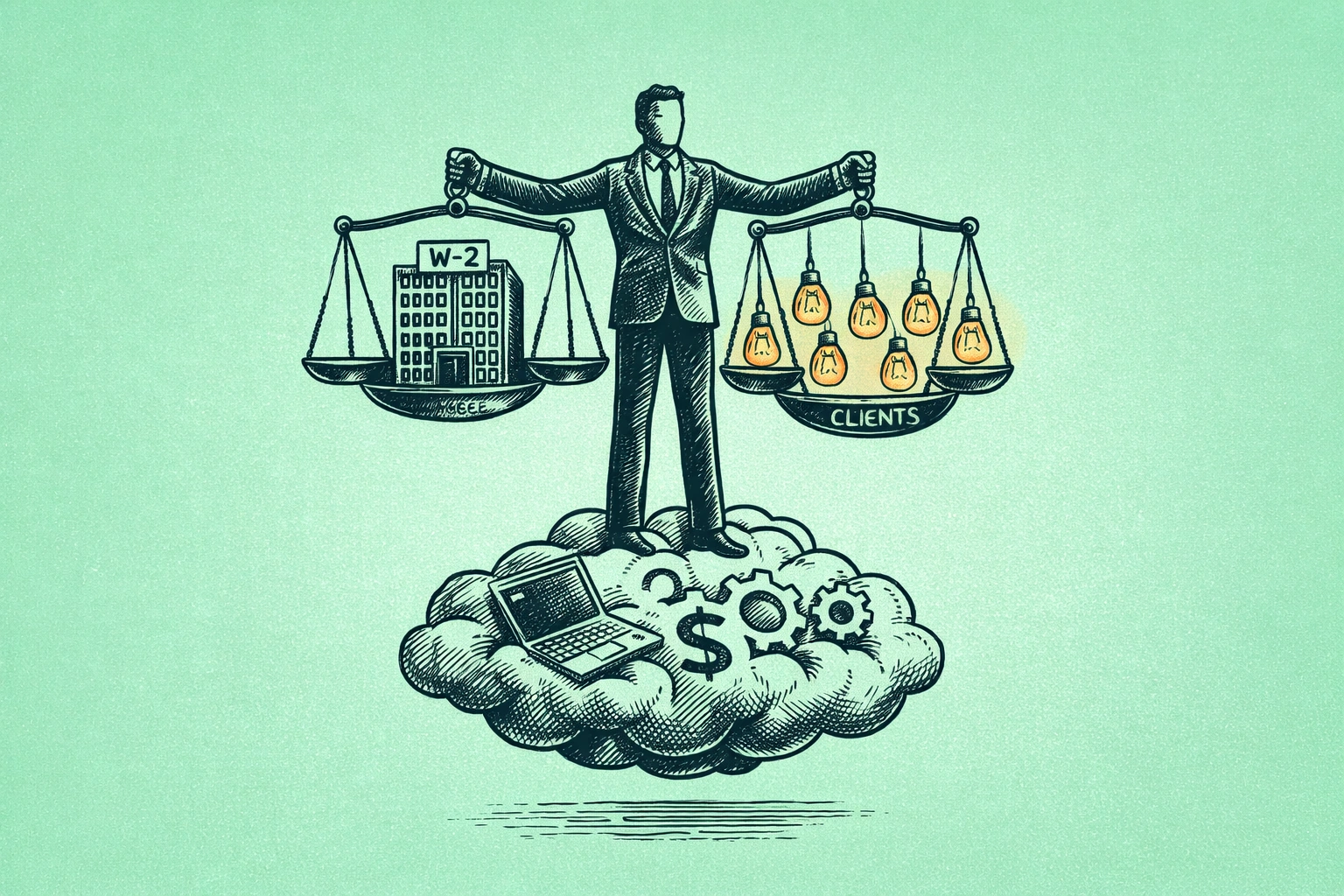
The fuller model is that promotions happen at the intersection of three things: organizational need, internal advocacy, and your demonstrated readiness. Performance matters, but it’s necessary rather than sufficient. Plenty of strong performers don’t get promoted, and a few mediocre ones do, because the other two variables are doing more work than most people realize.
Organizational need means there’s a role, a function, or a problem that requires someone at the next level — either because of headcount, because a gap exists, or because you’ve made the case that it should. In a hiring freeze environment, organizational need is actively being suppressed at the external hiring level, which creates an unusual dynamic: internal promotions become the primary mechanism for filling expanded responsibilities, because the alternative (external hiring) is constrained. Companies running lean headcount are regularly asking existing people to absorb work that would previously have generated a new hire. That’s an organizational need. The question is whether you’re the person who turns that informal expansion into a formal title change.
Internal advocacy means someone with organizational power — ideally more than one person — is actively putting your name forward when advancement discussions happen. Managers have some advocacy capacity. People two levels above your manager have more. The sponsor relationship — someone senior who uses their political capital to advance your career rather than just giving you advice — is the most consistently cited factor in fast promotions, and it’s the most consistently under-built by people who are otherwise doing everything right.
Demonstrated readiness is where most career advice focuses, and rightly so — but the framing matters. Readiness isn’t primarily about being competent at your current job. It’s about having already done visible work at the level above your current role, such that the promotion feels like recognition of what you’re already doing rather than a bet on what you might become.
The Visibility Problem and Why Hard Work Alone Doesn’t Solve It
There’s a version of career advice that says: put your head down, do excellent work, and the results will speak for themselves. I’ve seen this advice fail enough times that I think it’s worth naming directly. Results speak for themselves only when the right people are present to hear them.
In most organizations, there are two simultaneous economies running: the actual work economy, where you produce deliverables, ship projects, hit numbers, and solve problems; and the visibility economy, where those results get attributed, remembered, and connected to your name in the minds of the people who decide promotions. The work economy and the visibility economy are related but not identical. Someone can do excellent work and have poor visibility; someone can have strong visibility and mediocre results. Both create career problems. But the first — strong work, low visibility — is the one that traps competent people at the same level for years.
Join The Global Frame
Money, work, and tech — one read every Saturday that actually changes how you think.
Visibility in the 2026 context has a specific shape. It’s not self-promotion in the cringe sense. It’s choosing to work on things that are visible to the people above your immediate manager. It’s communicating results in terms that map to what those people care about — business impact, team capability, risk reduction — rather than in terms of effort or activity. It’s having a record of your contributions that you can articulate in thirty seconds when a senior leader asks what you’ve been working on, because those thirty-second moments happen more often than people expect and matter more than most people are prepared for.
What Actually Gets People Promoted (It’s Not Output)
The most practical visibility tool in most organizations is the skip-level relationship — a working relationship, however informal, with your manager’s manager. In the return-to-office environment of 2026, where in-person proximity creates organic visibility for some people and not others, deliberately building skip-level relationships matters more, not less, than it did in a fully remote context. You don’t need a formal mentorship program. You need a track record of delivering on things that person cares about, and enough regular interaction that your name comes up favorably in their mental model.
The Sponsor Distinction Most Careers Are Missing
Mentors and sponsors are frequently conflated, and the conflation costs people advancement they’d otherwise have captured.
A mentor is someone who gives you advice, helps you think through decisions, and reflects their experience back at you. Mentors are valuable. A sponsor is someone who uses their own political capital to put your name in rooms where you’re not present. They advocate. They nominate you for high-visibility projects. They say “you should talk to [your name]” when their peers are looking for someone. Sponsors advance careers; mentors develop skills. Both matter, but they’re not substitutes for each other.
The promotion research is clear on this: people with sponsors get promoted faster, get assigned to higher-profile work, and reach senior levels at higher rates than comparable performers without sponsors. The mechanism is not mysterious — sponsorship routes around the visibility problem by having someone with organizational credibility solve it on your behalf.
Building a sponsor relationship is not something you ask for directly. It’s something you earn through a sequence: deliver excellent work on something they care about; make their job easier in a way that’s visible to them; communicate results in terms of their priorities; and over time, let them see enough of your thinking that they become confident advocating for you. The relationship has to be real, not performative, because sponsors put their own credibility on the line when they advocate. Nobody sponsors someone they haven’t genuinely observed performing.
The practical implication in a hiring freeze environment: identify the two or three people in your organization with the power to influence your next step — not your immediate manager, but people above them who interact with your work. Understand what they’re trying to accomplish. Find legitimate ways to contribute to those things. Over six to twelve months, this builds the kind of relationship that generates internal advocacy when a promotion conversation happens.
The Promotion Conversation: How and When to Have It
Most people wait too long to have an explicit promotion conversation, then have it wrong when they do.
The right time to have it is not when you feel ready — it’s when the organizational conditions make yes structurally possible. Promotion conversations are most productive after a visible win, at the beginning of a performance cycle when budget and headcount are being planned, or when you’ve just absorbed meaningful additional responsibility without a title change. These moments create natural opening — the question becomes “how do we formalize what’s already happening?” rather than “can we create something new?”
How to Build the Case Before You Ask
The conversation itself should be a business proposal, not a personal request. The difference matters. A personal request sounds like: “I’ve been here two years and I think I’m ready for the next level.” A business proposal sounds like: “Over the past six months I’ve been managing [specific scope], delivering [specific results], and I’m already functioning at [next level]. I’d like to discuss formalizing that in my title and compensation.” One is asking for recognition. The other is making a business case for what the organization is already getting.
Before the conversation, get specific answers to two questions. First: what does [next level] actually look like in this organization? Not generically, but specifically — what did the last two people who got promoted to that level do, how did they demonstrate readiness, how long were they at your current level? This information tells you what the decision-makers actually weight, which is often different from what the official performance criteria say. Second: what is your manager’s appetite and capacity to advocate for you? A manager who says “yes, you’re ready, let’s make the case” is a different situation from a manager who says “you’re doing great” but has never put your name forward. If your manager lacks the appetite or organizational standing to advocate for your promotion, identifying and cultivating a sponsor above them becomes the more productive path.
The Lateral Move as Promotion Strategy
One of the underused career tools in a hiring-freeze environment is the lateral move — a same-level role change within your organization that expands your scope, adds responsibility, or gives you experience in a function closer to where you want to be.
Lateral moves carry a stigma in career culture that they don’t deserve. They feel like standing still when you want to be moving forward. In practice, a lateral that adds budget responsibility, team management, cross-functional exposure, or proximity to revenue — even at the same title — often creates the conditions for a faster subsequent promotion than waiting at the same desk for a vertical opening that may not come.
The AI job displacement analysis I published recently is relevant here: the roles showing stable or growing demand are those with accumulated domain knowledge, client relationships, and human judgment that AI augments rather than substitutes. A lateral move that puts you closer to revenue, closer to the client, or into a role with more direct business impact moves you into that territory — which matters both for promotion and for the career security argument about building the kind of role that’s genuinely hard to eliminate.
The AI Fluency Variable Nobody’s Saying Out Loud
There is a promotion dynamic in 2026 that most career advice is either missing or mentioning too generically to be useful: AI fluency at the professional level is becoming a differentiator in promotion decisions in a specific way.
The people getting promoted in AI-exposed functions are not primarily the ones who’ve read the most about AI. They’re the ones who are using AI tools to deliver more — more analysis, more output, more coverage of the work — with the same or less time, and who can articulate that productivity gain in terms of business impact. A manager looking at two otherwise comparable candidates for promotion who can see that one is consistently producing at a higher level using available tools has an easy choice. The candidate who hasn’t integrated those tools into their workflow is being benchmarked against someone who has.
The Conversation and What Comes After
The AI generalist career post covers this at length. The short version for promotion purposes: pick two or three specific AI tools that directly address time-consuming parts of your current role, use them consistently, track the output difference, and communicate that output difference in your promotion case. “I’ve been using [tool] to handle [specific task], which freed up time for [higher-value work]” is a concrete, credible statement of value that sits well above most of what people say in promotion conversations.
The Case You Need to Build Right Now
Promotions are prepared for over months, not requested in a single conversation. The practical to-do from this post isn’t one thing — it’s a sequence.
Start with an honest audit: what level are you actually functioning at versus what level you’re titled at? What have you done in the last six months that was at or above the next level? Document it specifically — numbers, scope, outcomes. If the honest answer is that you haven’t done anything at the next level, that’s the gap to close before the conversation, not during it.
Then map the decision-making structure above you. Who has the power to approve your promotion? Who influences that person? What do they care about? Are there legitimate ways to connect your work to those priorities?
Finally, identify the relationship that’s doing the most work for or against you. If you have a manager who advocates actively, that’s an asset. If you have a manager who’s passive, building skip-level relationships becomes the work. If you’ve been invisible above your immediate manager’s level, the path to promotion runs through solving that problem first.
The salary negotiation framework covers the compensation conversation that follows the promotion decision — but the promotion decision itself comes first, and it comes from everything described above. The conversation where you ask is the last step of a long preparation. Most people treat it as the first.